
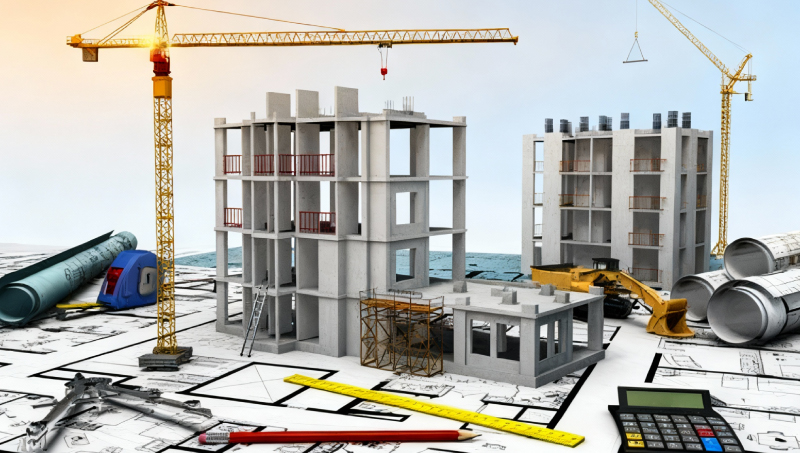
Structural Design
Structural Design is the scientific and engineering process of creating a building framework that is safe, stable, durable, and capable of withstanding loads such as gravity, wind, earthquakes, and environmental forces. It determines how beams, columns, slabs, foundations, and other structural elements will support the overall building.
While Architectural Design focuses on aesthetics and functionality, Structural Design ensures that the structure stands strong for decades — without failure.
Why Structural Design Is Important
1. Ensures Safety & Stability
A building must withstand gravity, live loads, wind, rain, and seismic forces. Structural design verifies that every component can handle stress safely.
2. Prevents Structural Failures
Poor design leads to cracks, tilting, settlement, or collapse. Structural engineering eliminates these risks through scientific calculations.
3. Optimizes Construction Cost
Engineers choose the right materials and sizes, helping reduce unnecessary concrete, steel, and construction costs.
4. Increases Longevity
A properly designed structure lasts longer and requires less maintenance.
5. Ensures Legal Compliance
Municipal authority approvals, building codes, BNBC requirements, and safety standards all depend on accurate structural design.
Key Elements of Structural Design
A complete structural design typically includes:
1. Columns
Vertical elements that carry building loads to the foundation.
2. Beams
Horizontal elements that support slabs and distribute loads.
3. Slabs
Floors or roof plates where live loads and furniture rest.
4. Foundations
Footings or piles that transfer the building weight to the ground.
5. Load Calculations
Live load, dead load, wind load, earthquake load — all must be analyzed properly.
6. Material Selection
Concrete grade, steel reinforcement, and construction materials are determined based on building type.
7. Structural Drawings
Detailed construction drawings for beams, slabs, columns, and reinforcements.
Types of Structural Design
1. RCC (Reinforced Cement Concrete) Design
Most common in residential and commercial buildings.
2. Steel Structure Design
Used for industrial buildings, large halls, factories, and high-rise structures.
3. Pre-Engineered Building (PEB) Design
Fast, lightweight, cost-efficient metal structures.
4. Bridge Structural Design
Includes slab bridges, steel bridges, truss bridges, and suspension bridges.
5. Foundation & Soil Structure Analysis
Ensures building compatibility with soil properties.
- Advantages of Professional Structural Design
- Ensures building safety
- Prevents cracks, deflection, and settlement
- Provides accurate reinforcement details
- Saves cost with optimized structural members
- Improves earthquake and wind resistance
- Helps builders construct confidently
- Boosts property strength and lifespan
- Required for building permits & approvals
How Structural Engineers Work (Step-by-Step)
1. Data & Requirement Collection
Architectural plan, soil test report, building height, load requirements.
2. Structural Analysis
Engineers use advanced software (ETABS, SAFE, STAAD Pro) to calculate load behavior.
3. Structural Design
Designing beams, slabs, columns, and foundations with required reinforcement.
4. Detail Drawing Preparation
Providing complete working drawings for construction teams.
5. Validation & Code Checking
Ensuring compliance with BNBC, ACI, and relevant international standards.
6. Construction Supervision
(If required) On-site guidance to ensure the structure is built according to design.
Conclusion
Structural Design is the backbone of any building. It ensures the strength, stability, and safety of a structure so that people can live and work without risk. Whether it’s a small house, a multi-storied building, or an industrial facility, professional structural design is essential for durability and long-term reliability.
Choosing the right engineering team ensures your building is both safe and cost-efficient — built to stand strong for generations.
Ready to order your project ?
Subscribe
Want to be notified about our News. Just sign up and we'll send you a notification by email.